



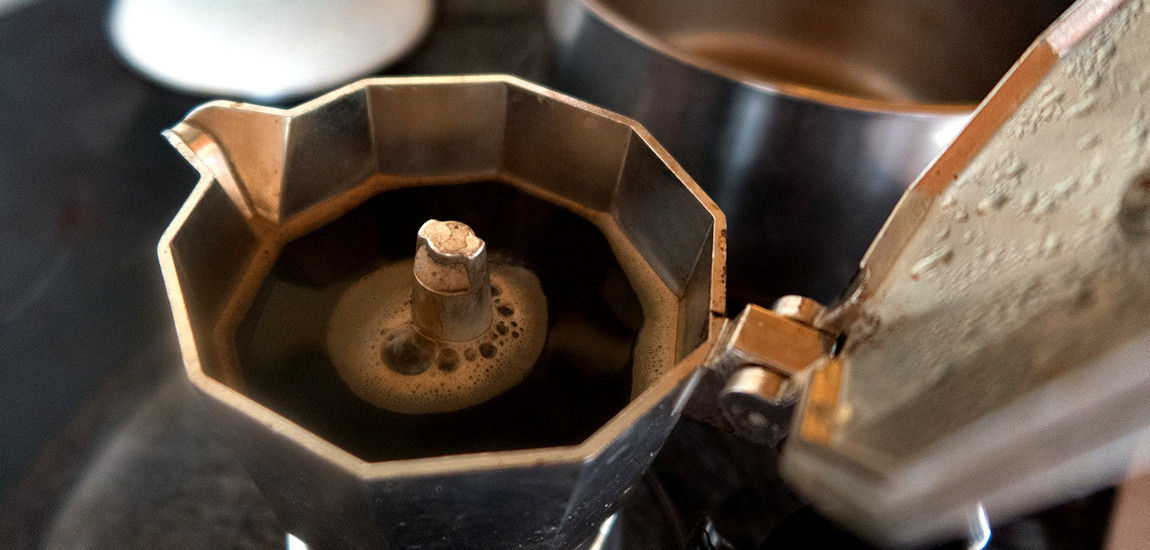
Coffee: moka or espresso?
When
you think of coffee, we
automatically think of Italy, of our espresso and cappuccino, with its foam so
dense and creamy you can even draw on it.
That’s because it is well known that Italians are big coffee lovers, so much so
that they have turned its preparation into an art and invented new ways of
preparing coffe that are appreciated and widespread all over the world.
Coffee beans from the East arrived in Italy, more precisely in Venice, around
1570.
Initially, very few perople could afford to buy them, but soon the first
"coffee shops" made an appearance and it became customary for lovers
to give each other chocolates and coffee as a token of love.
However, not everyone approved of this new product. Some members of the Church
even called for the "devil's drink" to be banned. Yet, after tasting
a cup, even the Pope could not help but give coffee his blessing.
Since then, coffee lovers have multiplied exponentially, and it has become a
drink Italians could never live without.
In Italy, it's rare to grab a takeaway coffee and sip it throughout the day.
Here, drinking coffee is a ritual, a moment of pause that allows you to unwind
for a few minutes. People usually don't bring coffee to work; instead, they
take a break from work to go and grab a coffee. We don’t even linger much and sit
at the table; we drink it standing at the bar counter, so it’s a quick stop,
but always a much needed one.
Despite Italians' great love for coffee, Italy isn't even among the top 10
countries in terms of per capita coffee consumption, likely due to the way it's
consumed here. In Europe, Finland, Norway, and Iceland lead the way, while in
the rest of the world, Canada is the largest coffee consumer.

But
what is the best way to prepare and
enjoy coffee? Opinions differ here. On the one hand, there are those who
say that the only real coffee is the espresso prepared at the bar, on the
other, there are loyal lovers of homemade coffee prepared with Moka
(coffee maker).
The
main differences between espresso and moka coffee are that the former has a
more intense flavor and presents a light foam or cream, while the latter has a
more delicate and homey flavor.
The
Moka is a true icon of Made in Italy, invented by Alfonso Bialetti in 1933. It became a mass consumer item in the
1950s, and today all Italians own one.
Anyone
who thinks that espresso, with its rich and full-bodied flavor, contains more
caffeine and is therefore to be preferred, will have to think again, because
this primacy belongs to coffee made with moka. That's because the amount of caffeine
in each cup depends on how long the boiling water remains in contact with the
ground coffee. Since the process of making coffee with the Moka is slower, the
amount of caffeine released is greater.
Perhaps it's for this reason that more than 70% of
Italians still prefer Moka coffee to espresso. After all, the ritual of
making coffee is as important as it is consuming the drink itself. If you ask
Italians what is the smell they prefer, they will most likely answer that
nothing makes them feel at home like the perfume that the coffee maker releases
in the morning.
If
it’s true that everyone can make their own coffee at home, it is also true that
not everbody can make a good coffee using the Moka. It seems easy enough, but
if you’re not careful, you'll end up drinking a coffee that is too watered down
or has a burnt aftertaste.
How to make coffee with moka:
- Fill the base with cold water up to the level of the valve and insert the filter.
- Fill the filter of ground coffee for moka completely, and without pressing the powder, level it with a knife.
- Put the moka over low heat, when the coffee starts to rise, lower it to the minimum.
- Remove the moka from the heat as soon as the coffee has risen to prevent it from burning.
